

Hey there! I’m Arkayo — an inexperienced Dutch solo hobby developer with a full time job that has nothing to do with any of this. I’ve had an idea for a game in my head for a long time: a real-time strategy survival game where players take command of the human immune system to defend against endless waves of invading bacteria or other pathogens. Let’s call it Cell Front.
I’ve always been fascinated by biology, especially how our bodies fight off infections. This will be a journey where, with the help of AI / Vibe Coding, I’m building a microscopic battlefield that’s equal parts educational and intense. Or it will be a journey where I show that game creation is not yet possible for the inexperienced! Who knows. Regardless, I am a massive nerd so I will drop some biology facts here and there, because biology is awesome. Don’t worry, I will collapse these, so you don’t have to read them!
So whether you’re into strategy games, curious about vibe coding a game from scratch, or just love the human body’s weird and wonderful defense mechanisms — welcome aboard! And let’s jump right into it!
How do I go about this vibe coding?
I did try my hands at Unity in the past and followed a few courses in coding, so I have a basic understanding of coding logic. Besides that, I’ll quickly run you through my setup. When I get to the building, I have:
- Unity game engine
- ChatGPT – I built a custom GPT that has the Game Design Doc of my game, which in turn I made with the help of ChatGPT. This custom GPT does the coding for me. When there is an error or it does not have the desired effect in game, I ask for it to be adjusted. I’ve set the GPT up in a way it explains it to me as if it teaches me, so there is always some explanation as to why things are what they are. Makes it easier to understand!
- Github – for iterations and code organization. For now I made it private, because I am too unfamiliar with it to oversee what happens when I open it up.
So yeah, that’s basically it! Before writing this first blog, I have made some progress, so the first couple of blogs will be reiterating what I’ve done so far. Let’s start with the basics.
Building the Foundations
I started with the main gameplay aspects. The enemies: bacteria and one of the good guys, a common white blood cell called a Neutrophil. I worked on making them into prefabs and gave them some basic shapes and colors. These need to spawn from somewhere, so I created a wound and artery spawning point. All big red blobs in empty space, not pretty, but functional!
Art vs No Art
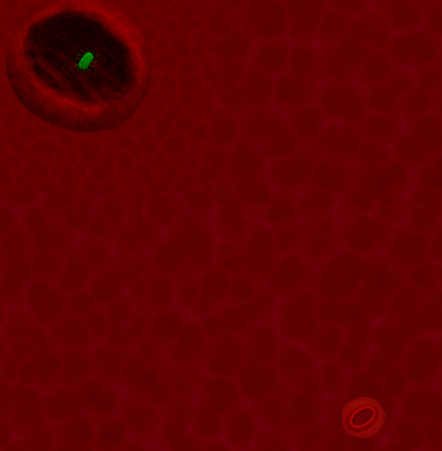
Working with placeholders is great, but it doesn’t give you the feel for the game. So I tried to find some artwork to use. In the asset store, there were some 3D options, but nothing 2D. I figured I’d spend some bucks on Fiverr.com, for someone to create a sprite of a bacteria, but that also turned out to be quite difficult. Then I realized I am quite stupid, because I have ChatGPT. So I asked it to generate a few bacteria sprite sheets that turned out great and useable! I continued asking for background art and placeholders for wounds and artery spawn. This is what the first draft looks like:
Swarming the Scene: Bacteria Behavior
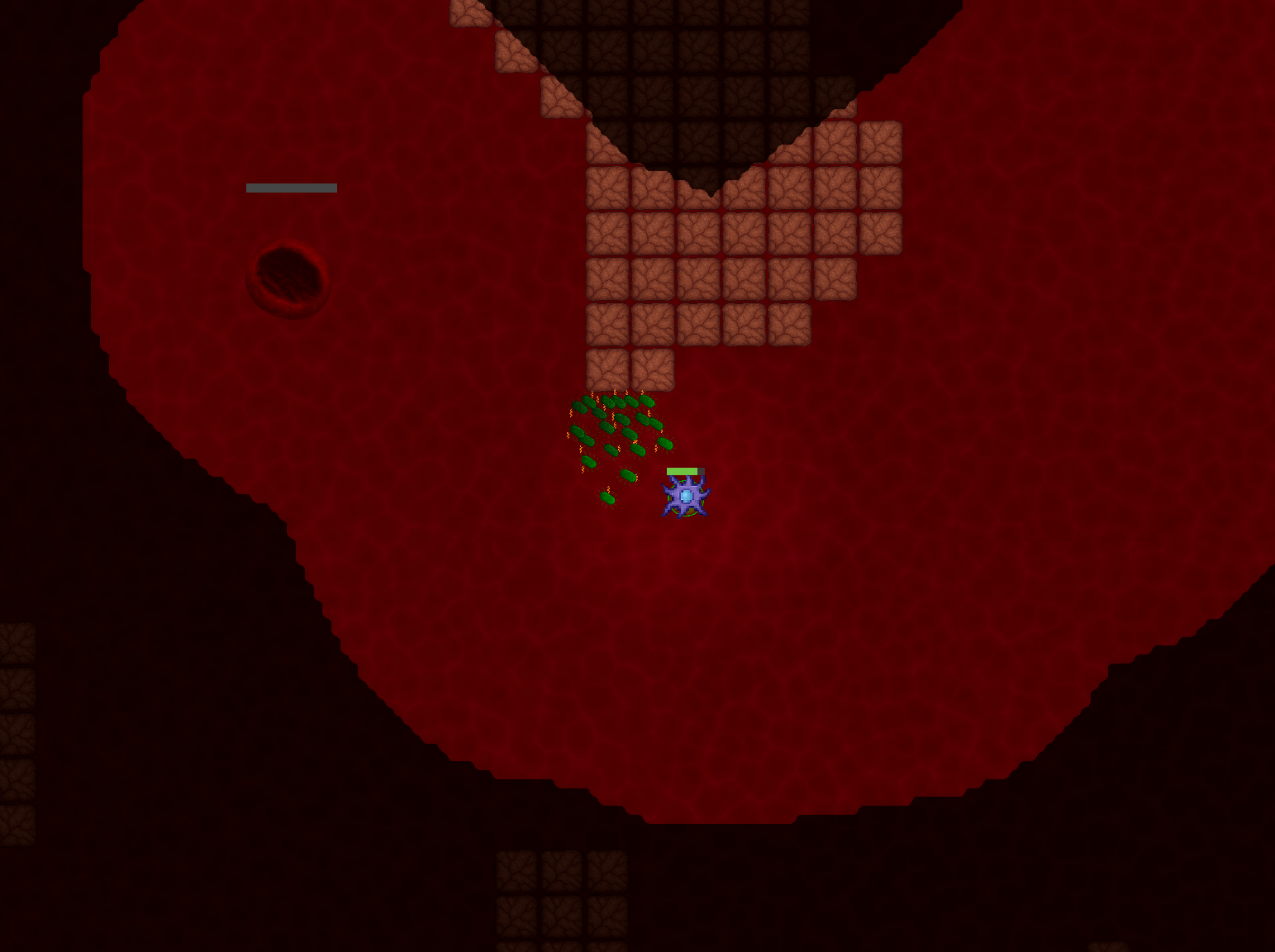
More about bacteria then! Each “wound” acts as a spawn point where bacteria emerge and start making their way toward a critical node — a part of the body they must not reach. For now, it is the artery.
Why is it bad if bacteria enter your bloodstream?
When bacteria slip into the bloodstream — a condition called “bacteremia” — they can spread quickly and trigger a dangerous immune overreaction known as “sepsis”. Instead of a localized fight, your whole body enters crisis mode, which can lead to tissue damage, organ failure, or even death. In Cell Front, this inspired the idea of protecting “critical nodes” — if bacteria reach them, the consequences are severe.
ChatGPT and I were really vibing at this point and I layered in some cool behavior from there:
- Basic targeting logic for bacteria to move ‘randomly’ toward the node
- Flocking and evading movement for a more natural swarm feel
- A crowd-based color shift to signal bacterial density
Eventually, I gave them light collision and avoidance rules so they wouldn’t stack weirdly. That made everything feel more… alive.
How do bacteria “know” where to go in real life?
Many bacteria use something called chemotaxis — they can sense and move toward higher concentrations of certain chemicals, like nutrients or inflammation signals. In Cell Front, that inspired the idea of bacteria moving toward vulnerable body nodes.
Neutrophil Call-In and Player Input
Next came the counterattacker. I set up a NeutrophilSpawner. Early on, it was just “press space to spawn a neutrophil.” But soon I layered in more strategy:
- A cooldown and immune energy cost for balance
- Right-click to set a manual target
- Selection rings and path indicators for feedback
- A subtle idle “wiggle” animation to make them feel less robotic
Yeah, that’s probably enough for now! There is so much more left to do and each functioning part makes me more excited!
If you enjoyed this blog, like and subscribe or whatever the blog version is of that!
I read your blog with great interest in order to fully understand its content. It is both engaging and clearly written, making it easy to follow. I encourage you to continue developing your skills in game creation—you show great potential.
As someone who saw you start from scratch on this project, it’s been exciting to see how you’ve been developing this game. I enjoyed reading about it as well. I’m looking forward to more 😁
Love the idea!
How do you envision combat will work? Each 1 HP and die on contact? Do Neutrophil level up and get better?
Great questions! At the moment bacteria have one HP and neutrophils 3 HP, so one neutrophil can destroy 3 bacteria. That will be upgradeable. I like the idea of levelling up individual units! It’s not on the to do list yet but I’ll consider adding it! Thank you!
Hey! Any progress with the game?
Second blog is live now! Thanks for the kick in the behind to get it written 🙂