Entry 02 · July 2025
Fast forward to now
A few weeks of evenings in, and for the first time it does something a person could call a game.
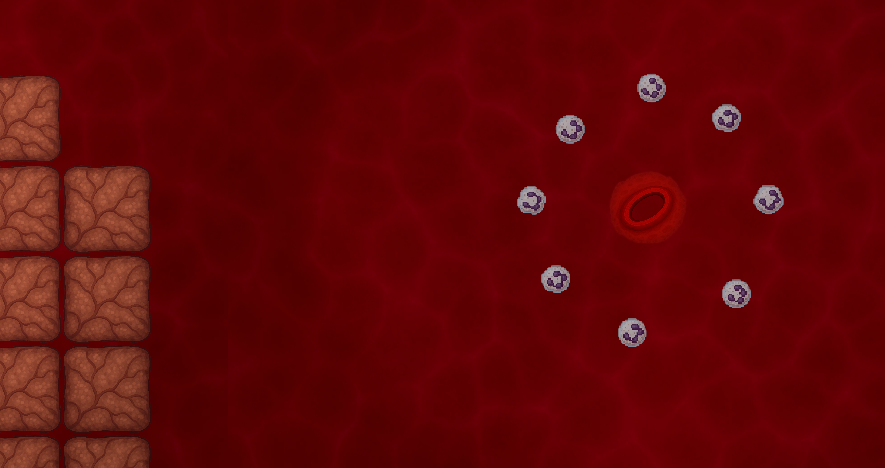
Cell Front continues to grow like an overactive lymph node (that’s good, right?), and this update might be the biggest one so far, to catch you up to where we stand today.
We’ve gone from blob-based basics to real-time tactical play. Units now respond like actual RTS squads, bacteria can sneak through the shadows, and the battlefield itself remembers where you’ve been. It’s all thanks to this glorious beast called Fog of War — which turned out to be way more fun to build than I expected.
Let me walk you through what’s new!
Enter Fog of War
Fog of War is one of those mechanics that makes or breaks a game. Let’s hope this one made it. I added a fog texture that covers the entire 2D world. It scales neatly to the game grid, so everything gets that classic unexplored mist vibe. Immune cells like neutrophils now shine a light (figuratively) on the fog, clearing out a circular zone around them.
Once you’ve seen a part of the map, it now stays dimly visible — even when no units are watching. It’s like your body “remembers” where it scouted before.
Oh, and those fog circles? They’re now gradient and smooth instead of harsh-edged. No jagged cutouts, just clean, anti-aliased glory. Gotta keep those edges organic!
Bacteria: Now You See Me, Now You Don’t
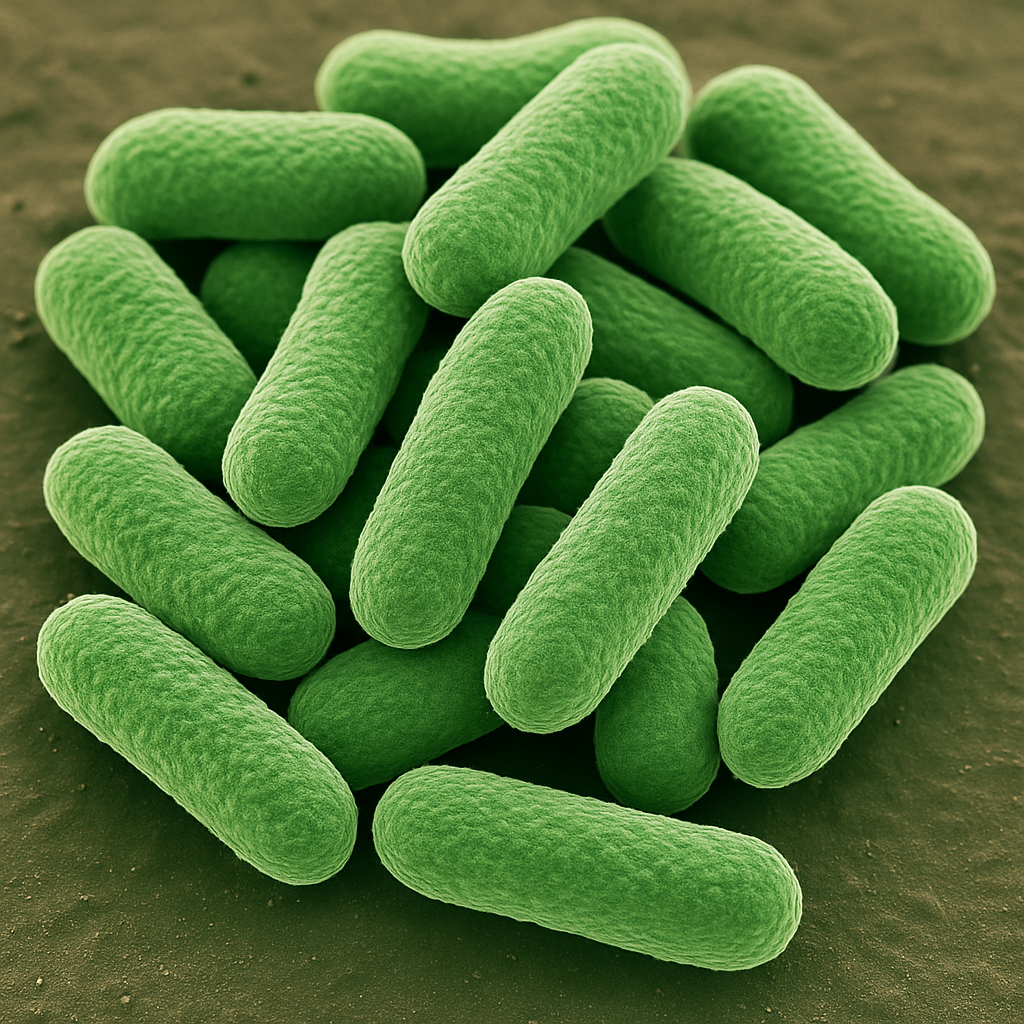
Here’s a fun one: bacteria now check whether they’re inside visible fog zones. If they’re not — poof! They become invisible. I made a little script that runs on each enemy, checking the fog texture instead of using colliders or raycasts (which would’ve been messy). Super clean, and it feels so much more tactical now.
Do bacteria actually try to hide?
Not in the same way video game enemies do, but some pathogens have sneaky tactics! Certain bacteria can avoid immune detection by hiding inside cells or cloaking themselves with proteins. It’s one of the reasons your immune system has to constantly evolve.
Select. Move. Attack.
This part felt like unlocking a whole new game: I finally implemented classic RTS controls! I’m still debating whether or not to get a premade plugin at some point, but in the spirit of learning, I started with designing it myself (my-ChatGPT-self). Goal:
- Left-click selects neutrophils
- Right-click sets a move or attack target
- Cyan selection rings to show who’s selected
- Drag a rectangle and boom, you’ve got a whole squad ready to go.
- Formations to be set: for now line and wedge formation
- Ghost images to show where cells will move to
- A line, showing the paths that the cells will travel
I had to wrestle with screen space vs UI anchors to get it right — but I’m happy with how snappy it feels now.
Smarter Spawning: Artery Gates
Originally I had separate scripts for spawning neutrophils and platelets. That got messy fast. So I made a new system called the ArteryGateSpawner. These gates are now the main way immune units enter the battlefield. It’s more biologically accurate and strategically fun.
Clicking on a gate pops up a nice UI panel where you can spawn:
- Neutrophils (cheap and fast)
- Platelets (used to seal wounds)
- Macrophages (big defenders)
- Dendritic cells (scouts for research points)
Each one costs a bit of immune energy, which is managed by a ResourceManager. So you can’t just spam — you’ve gotta plan. This is the initial system, I am still considering improvements and ways to build on this system for more complex gameplay.
Wait, what’s an ArteryGate?
It’s my in-game stand-in for blood vessel entry points. If bacteria reach one of these, it’s game over — kind of like breaching the castle gates in a tower defense game. They’re also where your immune cells come pouring out, like reinforcements from HQ.
Macrophages: Gentle Giants
Introducing my newest unit: the Macrophage!
These guys are big, slow, and strong. They gobble up bacteria (literally — it’s called phagocytosis).
Their logic is based on a new ‘UnitBase’ class that handles things like movement and selection in a modular way. Now all units (neutrophils, platelets, macrophages, etc.) follow the same rules — making it way easier to expand with things like T-cells and B-cells later.
Tech Tree and Dendritic Cells
It’s still early days, but I’ve built a prototype Tech Tree using xNode and some UI magic. You’ll unlock abilities, buffs, and new units over time by collecting research points (from Dendritic Cells). The Tech tree has smooth connectors, unlock indicators, and it updates dynamically as you gain points. Still needs polish, but it’s going to be the brain behind your immune strategy.
Speaking of which: Dendritic cells are the scouts of the current game, that need to contact a bacteria to gain a research point. You can collect up to a certain amount before the dendritic cell is ‘full’. Then bring it back safe to the Artery for the points to be delivered. Still much to tweak in this area (bacteria touch-physics and potential damage of staying too close to bacteria too long), but I am quite happy with the current approach.
How does immune research work in real life?
When immune cells encounter a new pathogen, they analyze parts of it (called antigens) and pass that info to T-cells and B-cells. This triggers a chain reaction of learning and adapting — kind of like unlocking a tech tree in-game!
That’s it for now, but let me at least finish with a screenshot on the current state of things! See you next time!